



A venture capital site that declines the wrong deck.

Publish where the mandate ends: stage, geography, cheque, lead or follow, and what the fund declines. Founders who fit send one comparable submission on your own domain, and it lands on the dealflow board with an owner and a date. The judgement stays with the partners.

Three ways a fund pays for the wrong deck, and what we build for each.

Each one is a problem we hear from this trade, in plain words, and what a SharpHaw subscription puts in its place.

  1. A founder at a cafe table rereading one paragraph of a fund's website, her notebook beside her listing five funds with a question mark against this one

    01 · The problem

    The thesis is so vague every founder thinks they fit.

    Stage, cheque size and geography are not written down, so the wrong companies apply and the right ones are not sure.

    A thesis page with edges: the stage, the cheque, the geography, and what the fund declines, so the wrong founder rules themselves out.

  2. An associate at his desk under one lamp holding a thick printed deck in one hand and a two-line email in the other, unable to compare them

    02 · The problem

    Decks arrive in any format, in one partner's inbox.

    A forty-slide deck, a two-line email and a data-room link cannot be compared, so they are read in the order they arrived.

    One submission form on the fund's own domain that asks the same questions of every founder, so any two can be put side by side.

  3. A stack of printed pitch decks on the corner of a partner table with a coffee cup set down on top and dust on the cover, the chair empty and the whiteboard blank

    03 · The problem

    Nobody sorts the pile, and nobody owns a deck until a meeting.

    Decks wait for weeks, founders hear nothing, and the good one is found late.

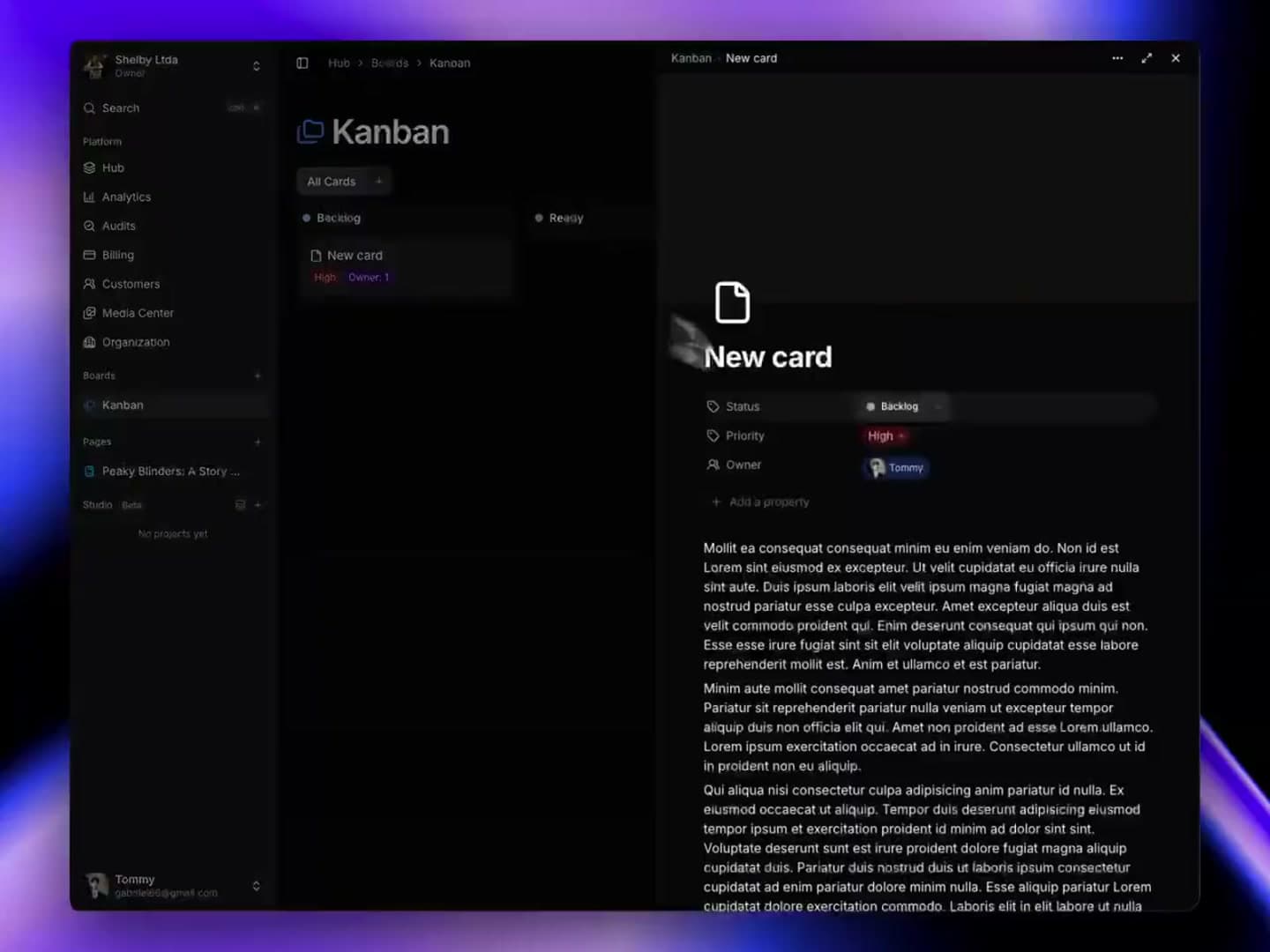
    Each submission becomes a card with its stage, an owner and a date. Nothing is scored; a partner opens it and decides.

Pricing

The price, before you ask.

Starter is €2.500/month, plus VAT, no annual contract, no setup fee. Everything on this page runs on it. Move up, down, or out any month.

Straight answers, before the call

Will a stricter thesis page mean fewer submissions?
Fewer from outside the mandate, which is the point, and nobody can promise the count either way. What the board shows from the first month is the share of submissions inside stage and geography, which is the number that decides how much partner time the inbox costs.
Does any of this decide who gets a meeting?
No. Routing reads the fields the founder filled in and puts a partner's name on the card. It does not rank, score or recommend. A partner opens every submission inside the mandate, and the fund decides what the ones outside it receive, whether that is a written reply pointing somewhere more useful or nothing.
Who sees a founder's deck?
The partners and whoever the fund names, by role, inside its own workspace. Submissions are never used as content, never shown as examples and never visible to another founder. How long they are kept is the fund's decision, stated in the notice, and the build follows it.
What goes on the thesis page beyond the mandate?
Pieces that show how the partners think without showing live work: the patterns the fund is pursuing, the questions it asks in a first meeting, what it has learned about a category, what a useful first submission contains. Drafted with a partner, published under a partner's name, approved word by word before it goes live.
What does it cost?
One fixed monthly fee with no discovery fee, no setup invoice and no minimum term, and the SharpOS workspace included rather than billed separately. Everything on this page is in Starter, the plan published above and on the Plans page, plus VAT, with no annual contract. Move up, down, or out any month.
How it works

One partner, one fee, one weekly loop.

What we stand for, how the fee works and how a week with us goes. The answers above cover the specifics; every line here can be checked on the Values page.

  • One partner, not four suppliers

    Website, content, ads and automations, run as one weekly loop from Starter.

  • One published fee, before the call

    Starter is on the Plans page, plus VAT, no setup fee, no annual contract.

  • The founder does the work

    The person on your first call is the person who ships it, every week.

  • Nothing finishes

    Plan, build, iterate: each month starts where the last one ended.

  • Yours stays yours, in writing

    Domain, brand, content and data are yours and leave with you.

  • And if you ever leave

    Any month, no exit fee, two months of continuity; the engine stays ours.

Who you would be working with

SharpHaw is one senior software engineer, Gabriel Espinheira, running the website, the content, the ads and the automations as one weekly loop for businesses across Europe, with SharpOS as the workspace it all runs in. How that works, who does the work, and everything the subscription covers are written up on the site.

Bring the inbox. Leave with the edges written down.

Thirty minutes on last month's inbound: which submissions sat outside stage or geography, what the founder could have checked on your site, and what a thesis page with edges would say first. Yours whether or not you engage. No proposal afterwards.